
Sea cucumbers have become an economic activity along the coast and a thriving commodity due to high market demand in Asia. They are marine animals that are invertebrates and belong to the class Holothuroidea. There are over 1200 known species of sea cucumbers world-wide. Often found on the ocean floor, they are useful and vital in the marine ecosystem for they are detritivores where they consume decomposing plants and animals in the ocean, helping in nutrient recycling as they break down organic matter.
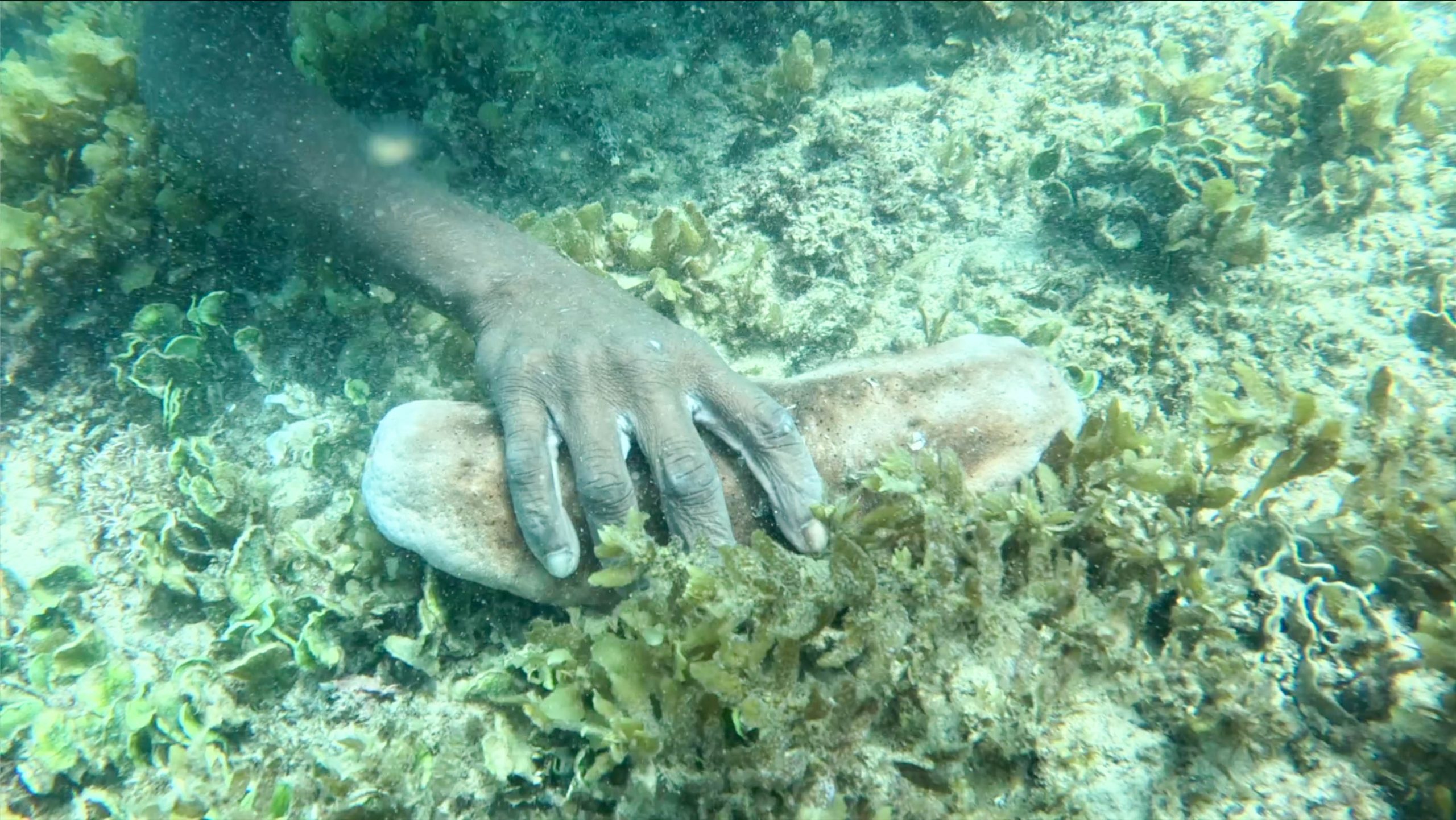
They are mostly known for their elongated bodies, but have varying sizes and have different colors which depend on different species. They can be sold as fresh or dried. Dried sea cucumbers tend to fetch high prices. To ensure sustainability of the sea cucumbers in our ocean, experts call for restoration for a sustainable future and to ensure these creatures don’t go extinct in the ocean.
According to Alfred Kazungu, a fisherman along the Kenyan coast who has been fishing for 30 years, he stopped fishing and started harvesting sea cucumber about 15 years ago. He however says that recently there has been a decrease of sea cucumbers.

“There are seasons where sea cucumbers are many in the ocean and there are seasons where you won’t find them at all,” he notes. He further states that when sea cucumbers were not marketable, they were easily accessible, but recently most fishermen have realized their value, and their profitability resulting in their scarcity due to over harvesting. “On a good day I can get at least one or two,” he says acknowledging that, ever since he started focusing on sea cucumber, he has been able to provide for his family shelter, take his children to school and it has lifted him economically.
In most cultures particularly in Asia, sea cucumber is not only considered as a delicacy and a symbol of affluence but as a source of medicine too.
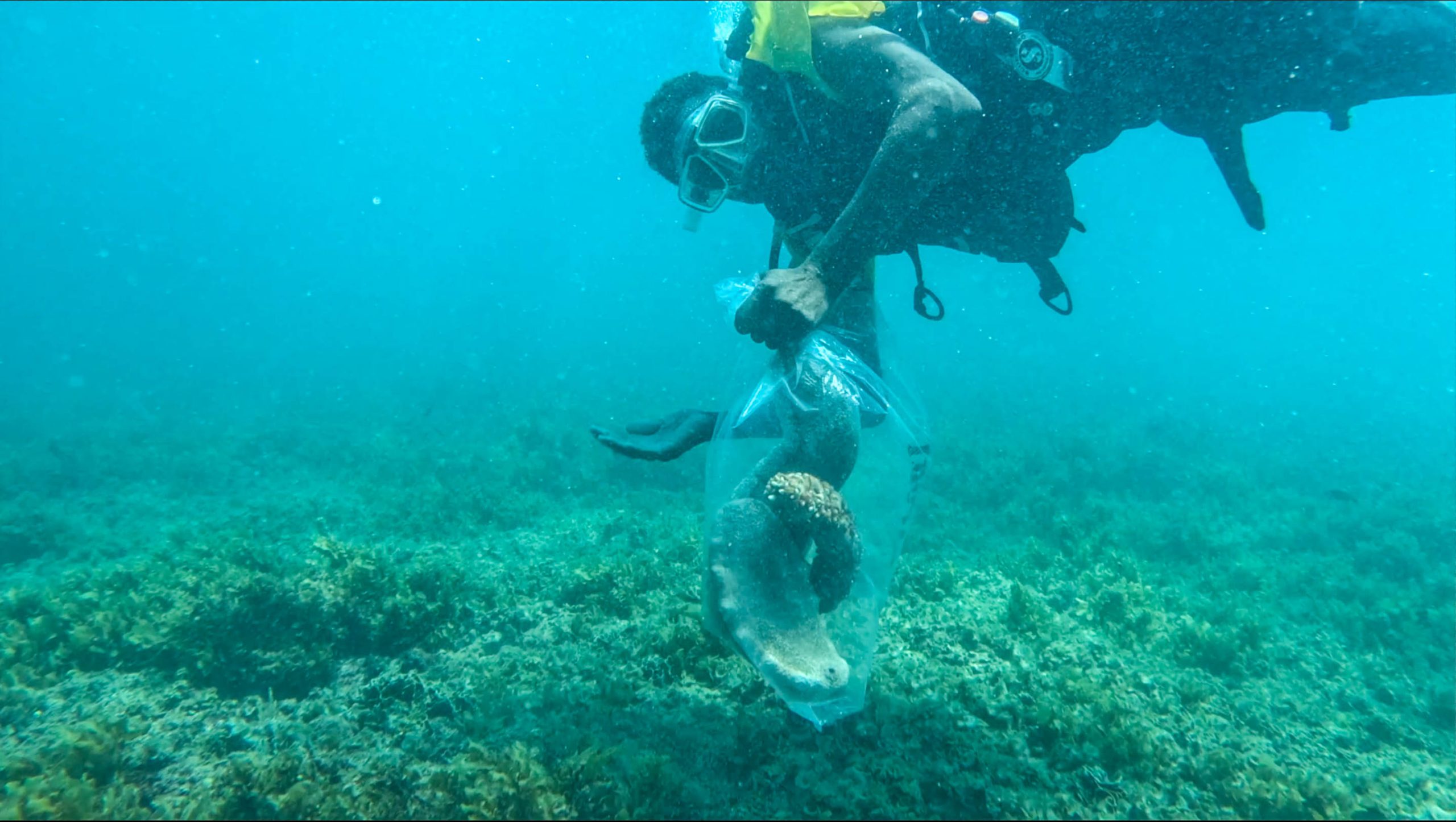
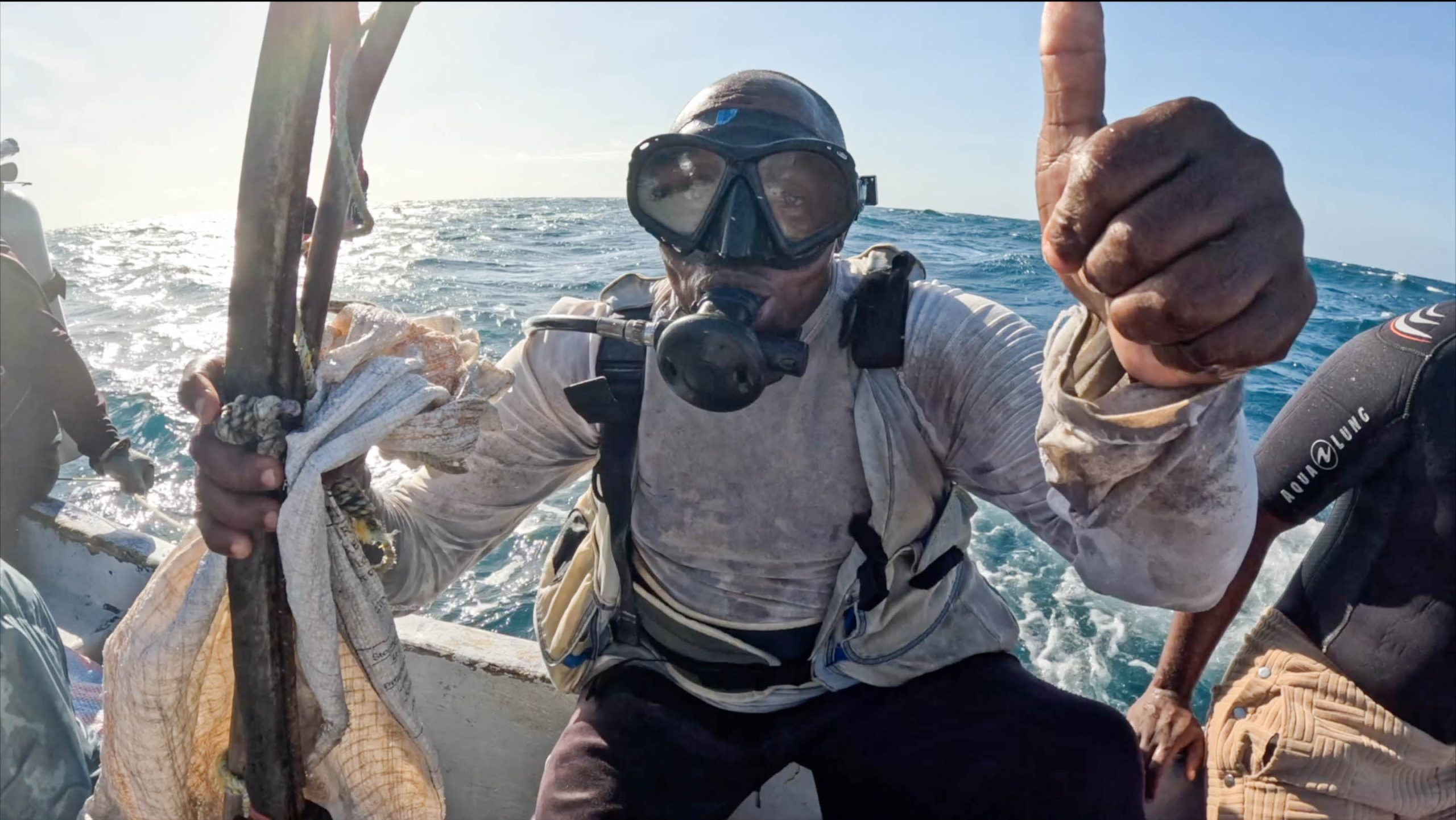
Hamadi Maingo, a fisherman who has been fishing in the coast for 35 years, who like Alfred Kazungu changed focus to sea cucumber says, “to catch sea cucumber, it’s mandatory to know sea diving. Most of these marine animals are found at the sea bed in the deep waters. You have to look for them to find them, and they mostly live in different areas, some you will find them in sand and others on rocks in the sea, since they are animals that are born and grown at the seabed.”

He mentions that even though there are different sea cucumbers in the market, there are some which are highly sought-after. Hamadi Maingo, is contracted, where those who give him the job to harvest sea cucumbers, provide tools to enable ease while harvesting in the deep waters. He does not know how much they are sold in the international market but when he gets these sea cucumbers he is paid according to the size. The bigger the size the better the price.
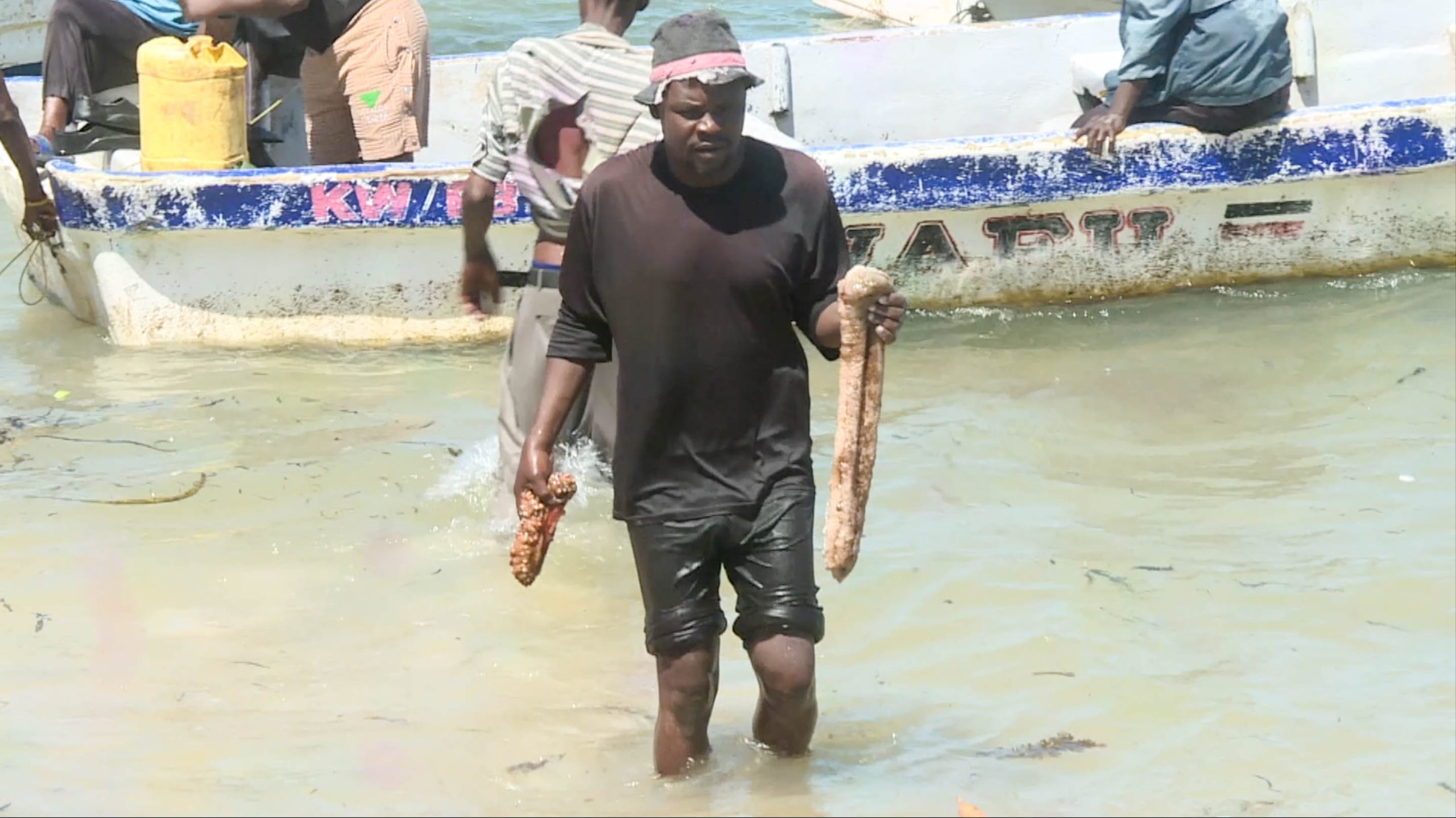
Being a lucrative trade, it has led to unsustainable harvests hence population decline. According to Juma Kiti, a sea cucumber businessman, there is high competition and one has to be strategic. He works with fishermen who source the animals for him. He says, “due to the scarcity of sourcing them, when I get them, I preserve them, and ensure when I go to sell them, they are fresh and I have a reasonable number to take to the market.”

According to Remy Oddenyo a marine scientist, “there are 44 species of sea cucumbers found at the Kenyan coastline and out of those species, Kenya has 17 species which are of economic significance to the fishermen due to their huge demand in the Asian market.”

“With the increased demand, there are species like Holothuria nobilis and Holothuria fuscogilva that have been listed as endangered species. To ensure sustainability and lack of exploitation and ensure there is proper management, there is a need for trade restrictions to be set in place, to prevent sea cucumbers from having high risk of extinction,” he says.
He further states that as long as international countries are taking an interest in the animals; there will be more pressure to harvest them due to increased demand. He says that this is a problem because they will be harvested when they are very young, limiting them to reach an age to contribute towards the future of the next generation of sea cucumber.
Sea Cucumbers have culinary status in some Asian countries like China, Hong Kong, and viewed as a luxury ingredient and being perceived as medicinal, it has become more valued and an expensive marine animal. To ensure their sustainability, there is a need for controlled markets that help monitor the trade.
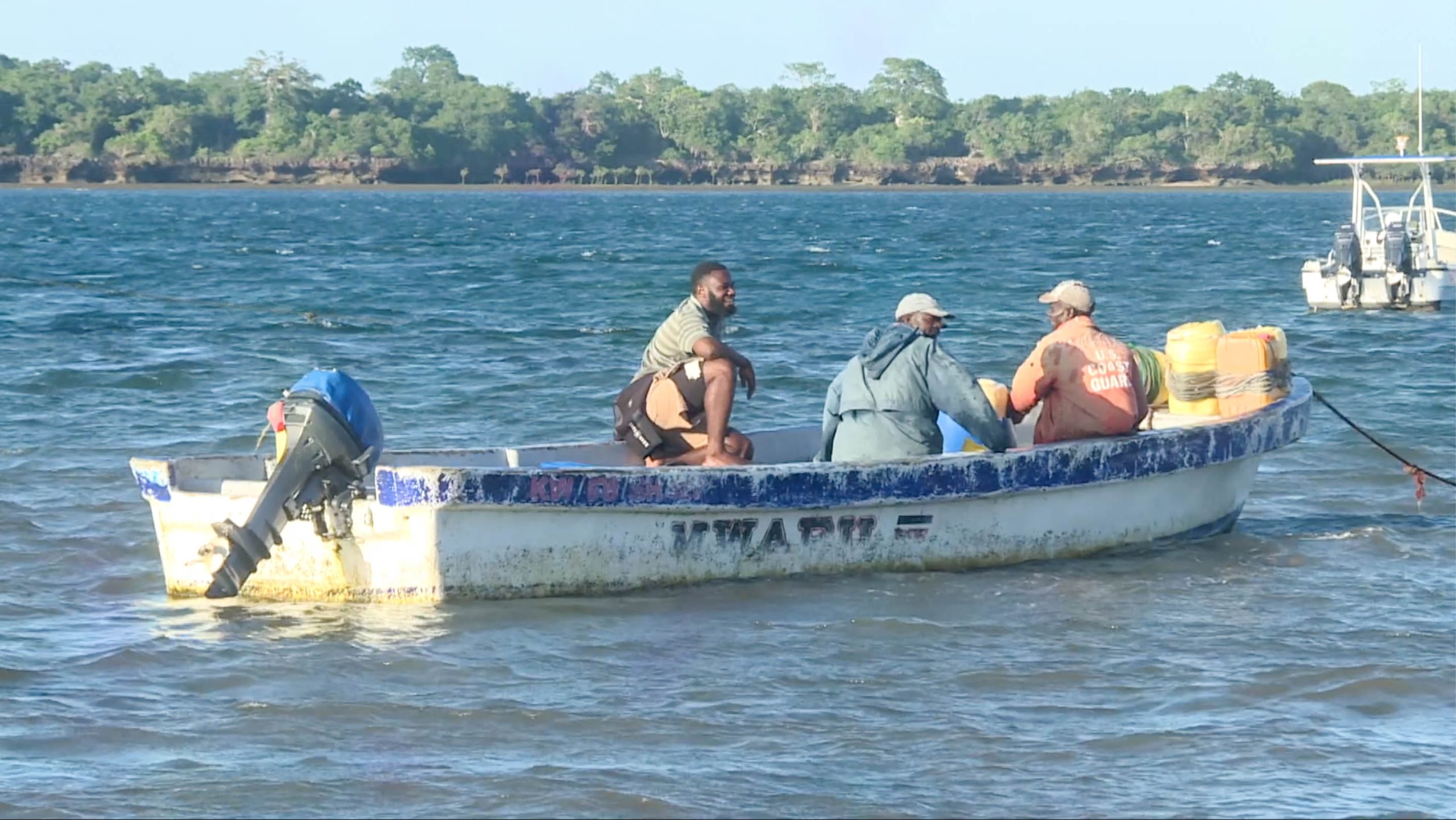
In addition, there is a need for strict regulations to help reduce overharvesting and curb illegal and unregulated harvesting especially in countries where they have prohibited sea cucumber harvesting.
To protect and ensure their continued growth, there is a need for aquaculture where there are nurseries for hatchery and sea- ranching to enable sustainable farming, ensuring communities are intentional with conservation and restoration. This helps reduce pressure, enabling steady supply that meets market demands while protecting the marine ecosystem.