
Food loss and waste is one of the major challenge when it comes to achieving sustainable, resilient and inclusive food systems globally. This is concerning, in a world where millions of people continue to experience food insecurity. The challenge goes beyond food produced that ends up discarded, but it also highlights other factors like the loss of land, water, labor, energy, capital and other resources invested while producing, processing, transporting and marketing food along the value chain. In 2023 the United Nations estimated 13.3% of food was lost globally after harvest and before reaching retail markets. In addition, approximately 1.05 billion tonnes of food was wasted at retail, food-service industry and households in 2022. The numbers are quite alarming, considering that FAO estimated that in 2025, around 645 million people may have faced hunger whereas, globally a third of the food produced never gets eaten.

The key questions we should ask is: How can we build sustainable and resilient food systems if we cannot adequately identify where, when and why food is being lost or wasted? And, how much of what we produce actually reaches people and provides nutritional and economic value? Food loss and waste, is caused by various factors, which often differ across countries, commodities and at different nodes across the value chain. For instance, at production and post- harvest level, losses can be caused by inadequate storage, lack of cooling facilities in farms, pests and diseases, poor food handling, poor transport infrastructure, lack of adequate finance, lack of technical expertise, poor management etc. Along the value chain, food is lost due to inefficiencies in logistics, market disrupts, inadequate processing facilities and poor coordination
between producers, aggregators, processors, traders and retailers. On the other hand, at retail and household levels, food is wasted due to short shelf life, excessive purchasing, poor meal planning, changing consumer demand etc. This simply highlights, that food loss and waste can happen at any point within the value chain.

The cost of food loss and waste can be experienced in diverse angles. For instance, environmental cost. FAO estimates that 8-10% of global greenhouse gas emission is due to food loss and waste. Whereas, according to world metrics agriculture draws about 70% of the world’s
freshwater withdrawal. This means that every tonne of food wasted tends to carry a carbon footprint. To contribute to climate action there is need to reduce food losses, so as to help towards efficient use of land and water while reducing unnecessary environmental pressure, since food systems, are affected by climate change, water scarcity, land degradation and biodiversity loss. The economic cost of food loss and waste has discouraged farmers from scaling and causing a lag of private entities in setting up processing companies that would create employment opportunities for women and youths especially in Africa due to inconsistencies of availability of raw materials.
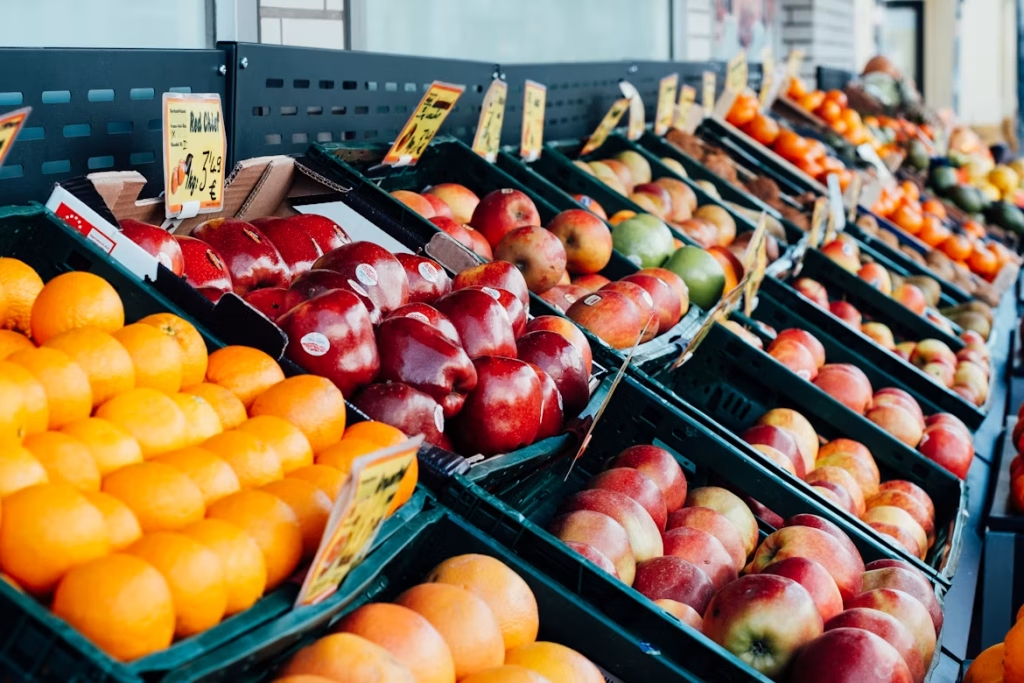
Sustainable development goal 12: Responsible Consumption and Production, specifically target 12.3 which calls for the world to halve per capita global food waste at the retail and consumer levels and reduce food losses along production and supply chains by 2030. This highlights the need for ethical responsibility on how we handle food and value food. This target reminds us, in order to achieve sustainable food systems, it requires more than increased production. There is need for countries governments to strengthen food policies and regulatory frameworks, improve on data for evident-based policies and investment decisions and building public-private partnership so as to create innovative business models around food waste reduction as well as enhance food monitoring and traceability.

As we celebrate the United Nation Day of Food Loss and Waste Reduction, we should remember it’s a collaborative initiative for all, to take action not government alone. We have to know how best to strengthen food redistribution and recovery, so as to reduce food insecurity, improve our food supply chains knowing what to produce, what quantities to produce, and who we are producing it for. Educate producers, value chain actors and consumers on better ways to store food and the importance of food systems and environmental reparations that results due to food waste.
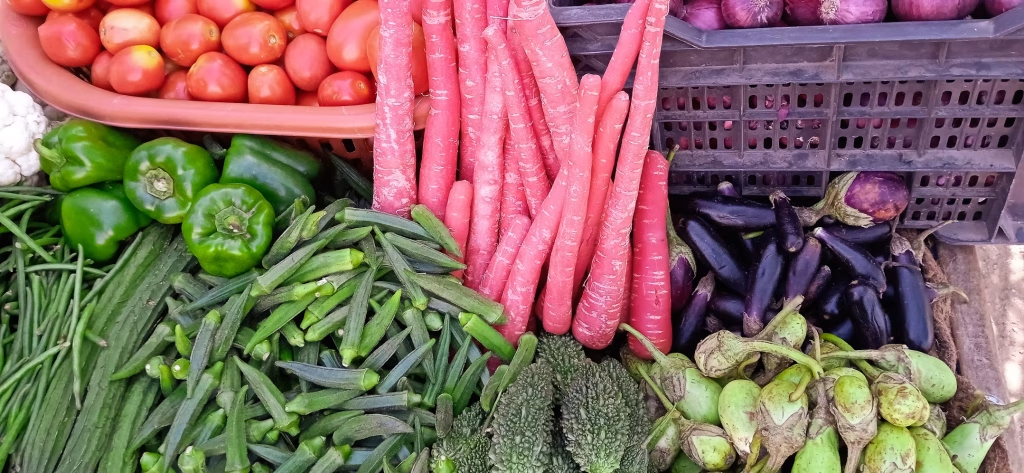
We should remember that, while producing more food is important, in improving food security, its also essential to ensure food produced is not lost or wasted
.
Images Courtesy: Edson Rosas, Josie Weiss, Markus Winkler, Joseph Gonzalez and Soham Rathod on Unsplash