
Silkworm farming is quietly taking root in Kenya, promising farmers year-round income from a crop where hardly anything is wasted and positioning the country for a space in the global silk market.
On a lush farm lined with Mulberry trees, silkworms are being reared as deliberately as dairy cows or poultry. “The propagation of silk was always in the wild and therefore the silkworm was domesticated so that it can be looked after just like cattle,” Peter Maina, Director of Silk Origin Limited explains, noting that the silkworm goes through a 28-day life cycle before producing a cocoon. From that cocoon comes the famed silk thread, which he says can reach “around 1,200 meters of silk fiber” from a single, well-fed worm.
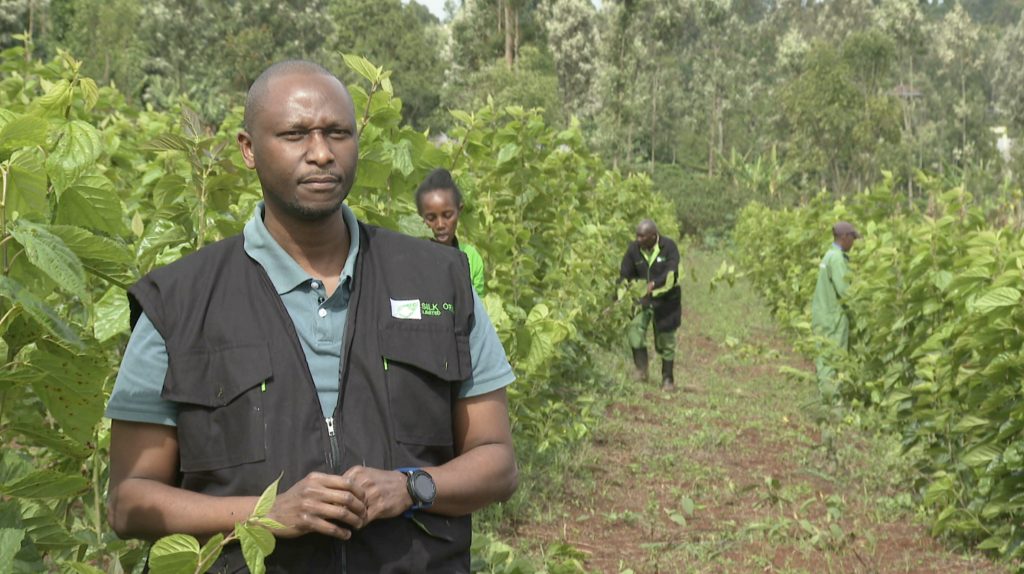
The venture, run by Silk Origin Limited, is deliberately framed as livestock and tree farming combined. “Sericulture is the cultivation of the silkworms and moriculture is the cultivation of the trees to produce the Mulberry leaves,” Peter says, emphasizing that both the worms and the Mulberry trees form an integrated system.
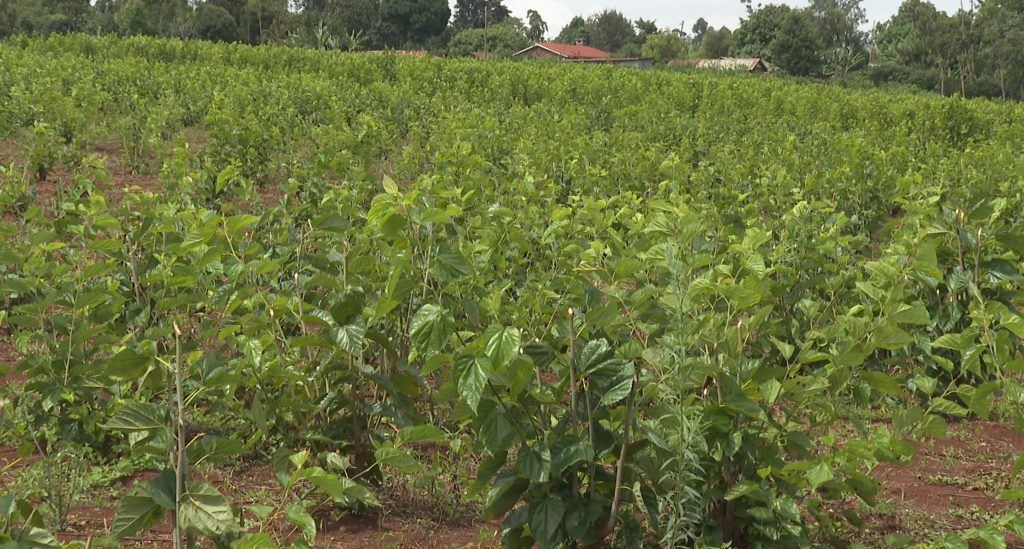
In a country where farmers are under pressure to get more value from every acre, the appeal of silk begins with its zero-waste promise. “There is no wastage in both processes,” Peter emphasizes, as he stands amid rows of Mulberry trees.
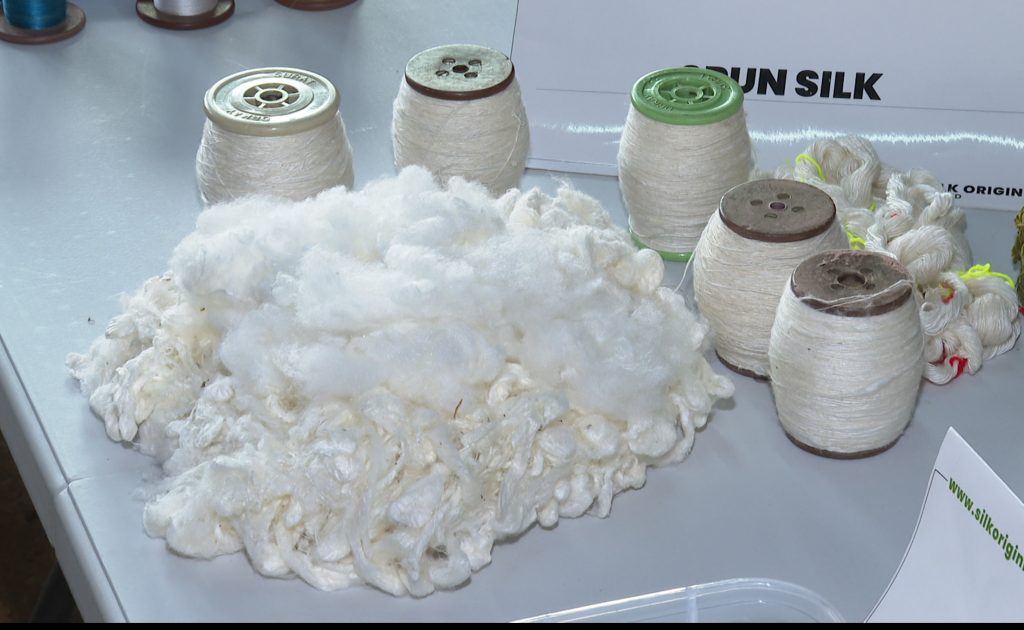
The worms, too, are fully utilized. “When you go to silk, the silkworms themselves, the chrysalis which is what is left inside when you open the pupa, the droppings themselves, all of them have uses,” he adds. The droppings, he explains, are “extremely rich in protein and can be used for chicken feed” or brought back to the farm as manure, while broken cocoons are used to stuff pillows and in facial cleansing products.
On value addition, the team has pushed beyond fiber into food and drink. Mulberry fruits are turned into what they call “tropical fruit wine,” and the leaves are processed into Mulberry green tea.
“We also have the Mulberry green tea with us,” says Andrew Limo, Sericulture Technician at Silk Origin Limited. “It’s an antioxidant which has three minerals, iron, calcium and zinc, which is very good for our health. It may lower high blood pressure and help regulate sugar levels in our bodies.”
Behind the glossy promise is a demanding routine. “Silkworms are heavy feeders and therefore you need a constant supply of fresh, clean leaves,” Peter cautions. The farm plants Mulberry trees “2.5 feet around the lines and five feet along the rows” to maintain a dense supply of foliage.
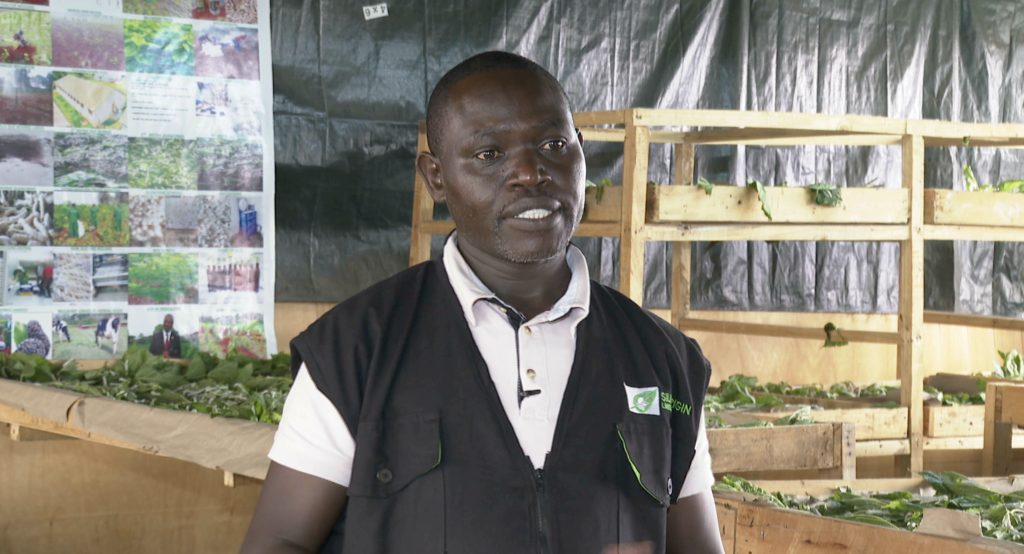
Rearing takes place in carefully managed houses where hygiene and climate control are non-negotiable. Visitors change into farm coats and disinfect their shoes before entry, as “the worms, they are very delicate.” Inside, the worms progress through five stages, moulting every few days. “After every five days the eggs moult. “They stay for two days without feeding, then they progress to the next stage,” Limo says.
Temperature is critical. “A typical rearing house must be well ventilated because when you have a well-ventilated rearing house the leaves will not wither,” the technician says, adding that “the worms don’t need higher temperatures beyond 30 degrees and above.” Pests such as lizards and rats have to be kept out, while a large plantation is needed to sustain the heavy feeding, especially in the last two stages when “the worms feed so much. “We feed them four times a day.” Limo says.
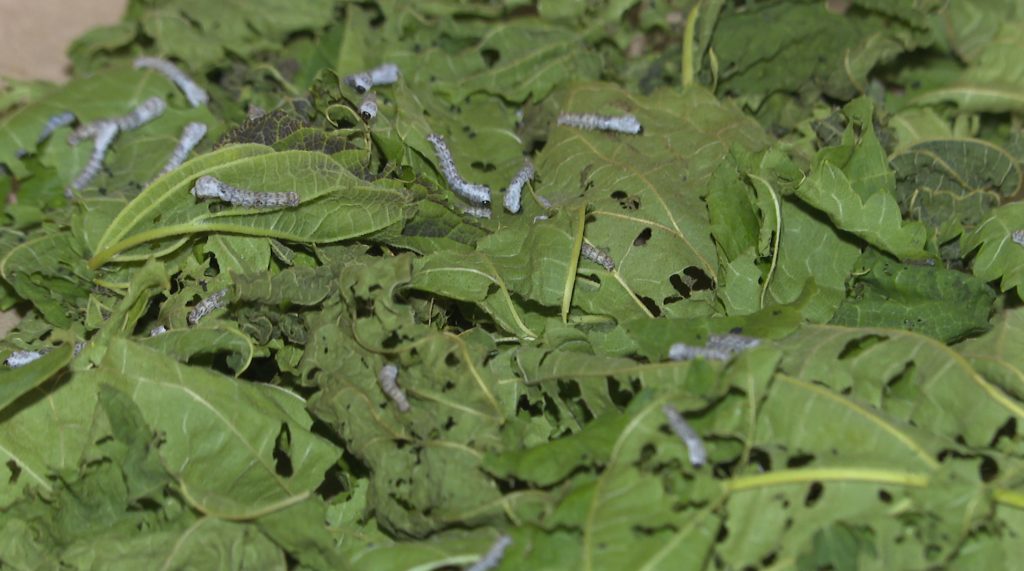
Like most farming ventures in Kenya, sericulture is already confronting climate shocks. A recent drought exposed the system’s vulnerability, “you need a constant supply of fresh clean leaves and as you saw with the drought that was there, that was not an easy thing to do,” he explains.
To cope, he says that the farm has invested in basic water infrastructure. “You must prepare your ecosystem to be ready for interventions as far as water is concerned,” he explains.
The farm now runs its own hatchery after training with various institutions. “We had collaborated with ICIPE and KALRO, so that they trained us until this stage; now we can have our own eggs,” says Limo, gesturing at trays of tiny silkworms. Once mature, the worms climb on the montages, and begin spinning.
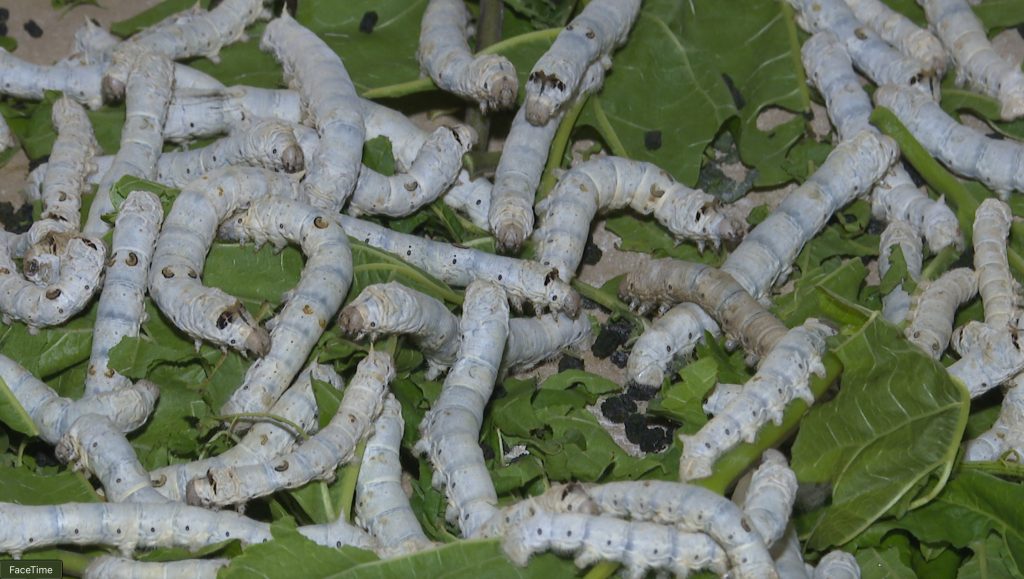
“The worm has two proteins, sericin and fibroin, so when the worm attaches to the montage it produces saliva then starts to spin which helps to release the thread,” he explains.
With global production still dominated by Asia, the entrepreneurs behind this model farm see a gap that Kenya can fill. “We looked at China’s weather patterns; they do not have the soil, the sun, the labor to be able to do it all year round, and we saw that as an opportunity,” Peter recalls.
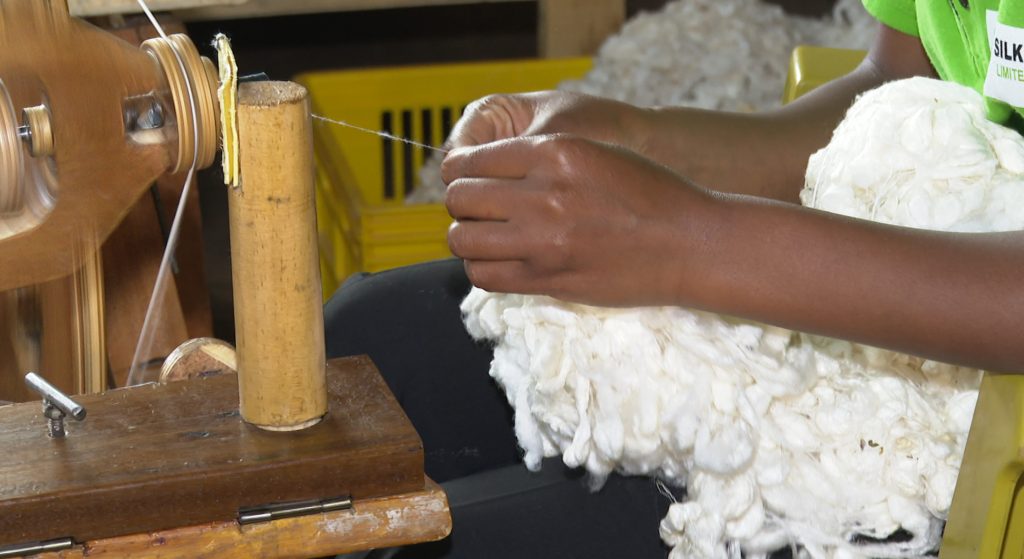
He believes that if more Kenyan farmers take the leap, the country could move from curiosity to serious player. “As a country we can really be self-reliant if many farmers really venture into this,” he says. “We can actually be an exporter of silk.”
Very interesting! Thank you for sharing!
Hello. I would like to learn and venture into collaboration for sericulture. My siblings and I have a total of 17 acres in an area with the right conditions for growing the mulberry plant.
Can I have a contact person to Silk Origin Limited? Much appreciated.
It is actually a great and helpful piece of info. I’m happy that you just shared this helpful info with us. Please stay us informed like this. Thanks for sharing.