
Bananas are not only one of the most commonly grown fruits in Kenya but are also proving to be a lucrative source of income for farmers embracing value addition.
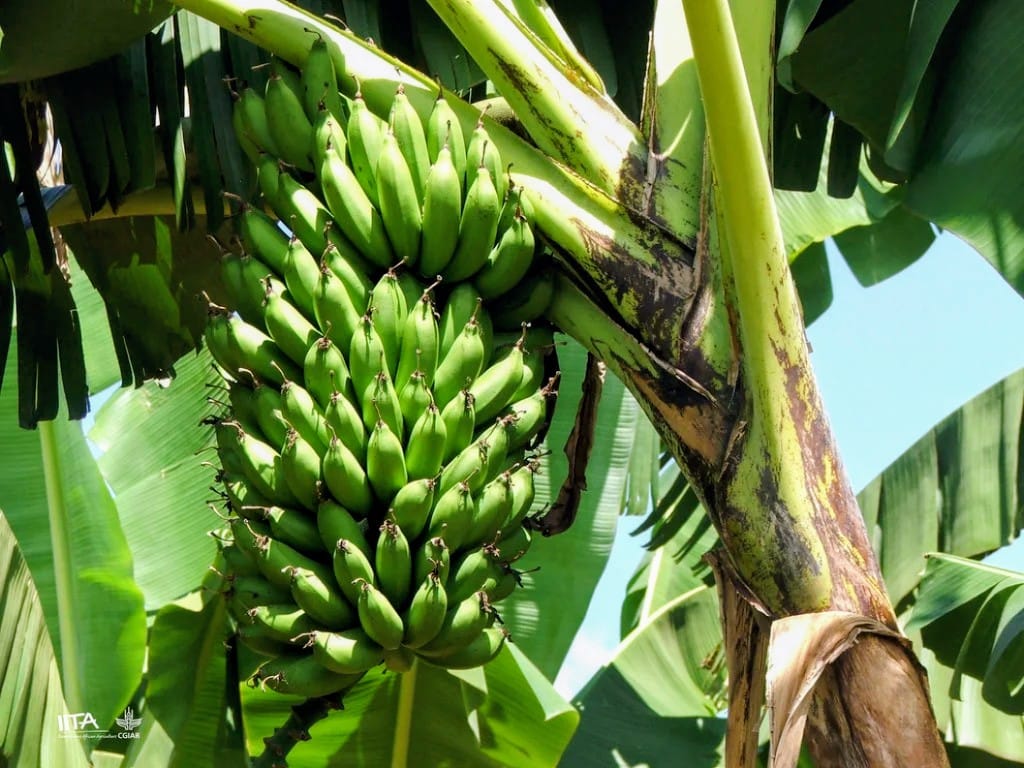
Banana farming in Kenya has traditionally focused on selling the fruit locally, either for cooking or as ripe fruits in markets. However, farmers have faced challenges such as poor post-harvest handling and transportation which often diminish the fruit’s quality.
The latest approaches seek to move beyond just selling raw bananas. As the host explains, “Bananas can be used in different ways, even the leaves are never wasted; they are used in cooking, wrapping, and food serving in many tropical cuisines.”
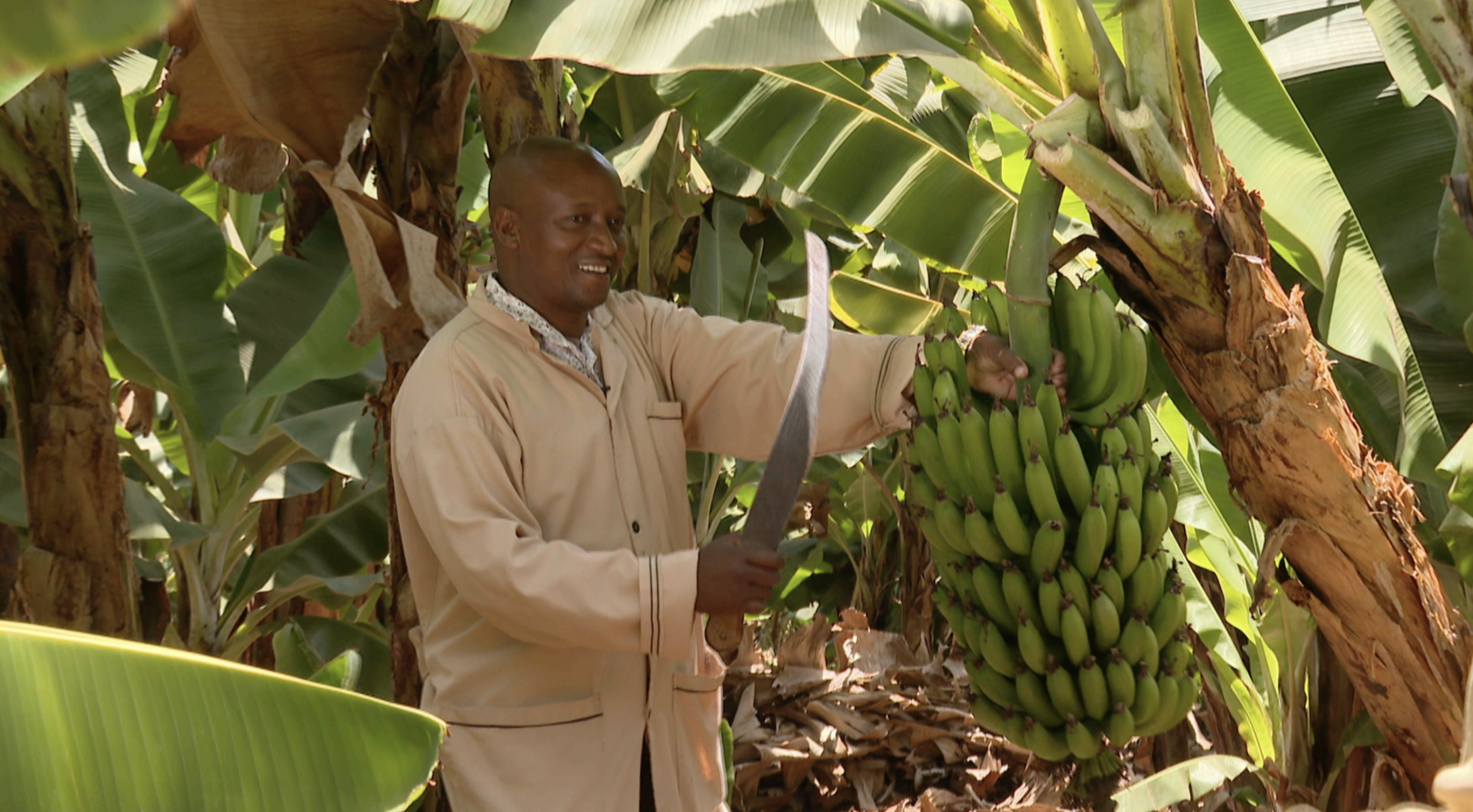
The featured processing plant, evolved from humble beginnings in 2016, now serves as a model of innovation. The entrepreneur behind this venture, Reuben Kabue, Director, Natural Ways Food Supplements limited, explained how the idea to process bananas originated from a gap he noticed after growing up in a banana-growing community.
“Everybody was talking about planting bananas but nobody was talking about how bananas can be processed,” Reuben said. This insight spurred the creation of a value addition factory turning bananas into composite flour and other products.
Initially started with a modest capital of only 17,000 Kenyan shillings—used to set up a solar dryer and test products—the company gradually expanded with support from the World Bank-backed Kenya Climate Smart Agriculture Project (KSAP). The project provided a conditional grant that funded machinery essential to scaling up production.
“They gave us a grant of 3.7 million shillings. We had to raise a similar amount on our own, and that helped us set up the factory as you see it today,” Reuben explained.
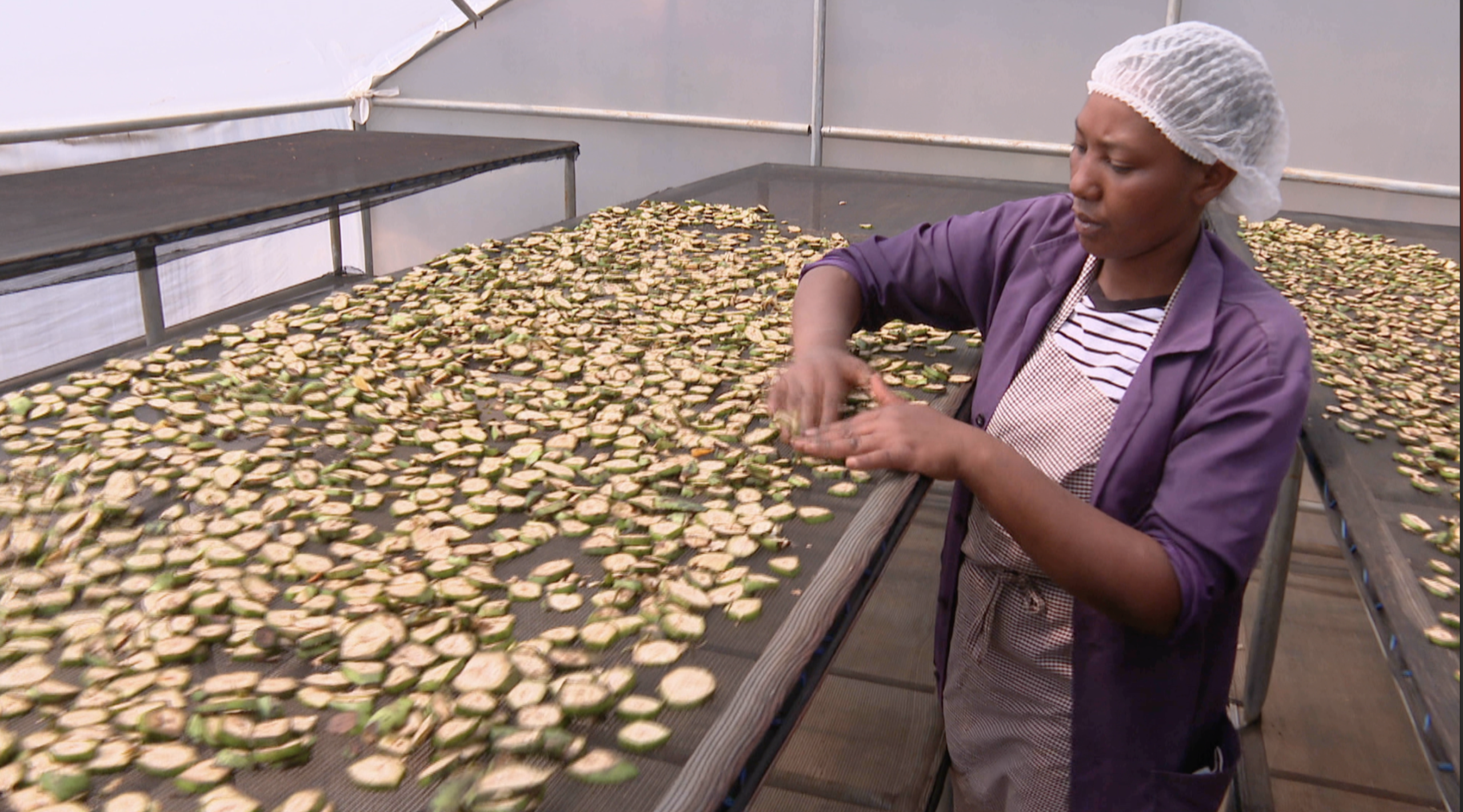
The process begins with harvesting and cleaning bananas, removing dirt and slicing them to prepare for drying. The slices are then dried in solar dryers, where temperatures can reach 60 to 65 degrees Celsius, preserving nutrients by preventing direct UV penetration. According to Reuben, “Drying the bananas in a solar dryer is better than drying outside because it preserves the nutrients better.”
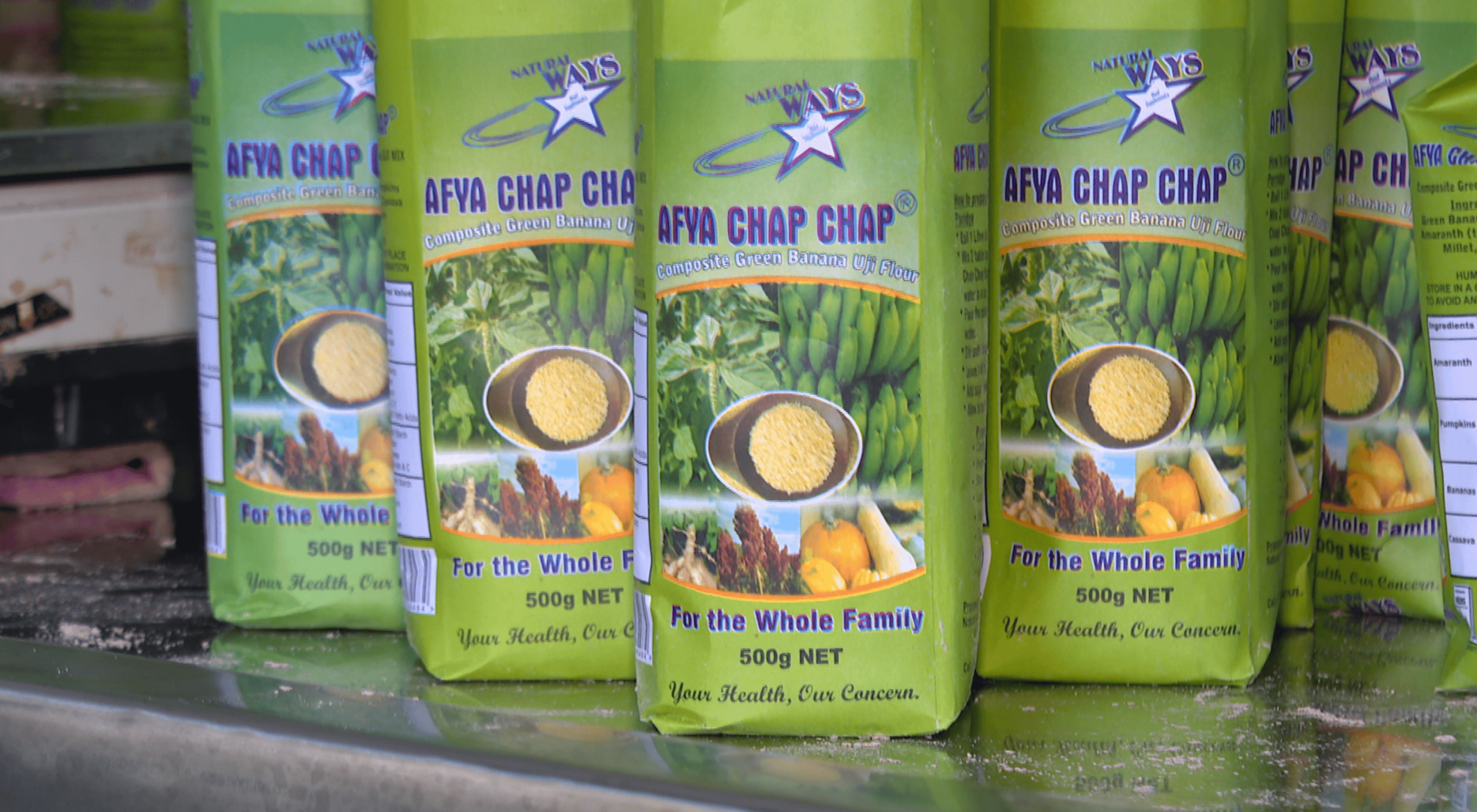
Once dried, the bananas go through milling where they are blended with other locally sourced ingredients like cassava, pumpkins, and sorghum to create a composite flour. This mix is designed based on advice from nutritionists to ensure quality and suitability for making porridge and ugali. “Our biggest component is bananas, but we add cassava and pumpkins for flavor and sorghum to help the flour thicken properly,” Reuben shared.
Packaging is the final step where the flour is portioned into packets of various sizes, labeled with expiry and batch numbers to guarantee quality control and traceability. The products are then distributed to supermarkets and markets across Kenya. The pricing stands at about 200 shillings per kilogram in retail, with wholesale packs available at a discount.
Reuben proudly states that the venture is highly profitable and has allowed for expansion, including the purchase of vehicles for marketing and transportation. He advises: “Even if you have a small piece of land, you can try the value addition of bananas at home.”
He also highlighted the sustainability aspect, noting how every part of the banana is utilized, including the banana peels which are rich in fiber and calcium, showing that “nothing goes to waste.”
This innovative approach to banana farming and processing is opening new pathways for Kenyan farmers to increase their incomes while reducing waste and improving food security. It reflects a growing trend in agribusiness where traditional crops are transformed into value-added products, creating a ripple effect of benefits throughout the agricultural value chain.